

The fintech industry in Latvia is shifting from a fast-moving, fragmented market to a more structured, policy-aware, and economically relevant sector, driven by the growing scale of the industry, deeper regulatory engagement, and ongoing infrastructure development, according to the Fintech Latvia Association.
In a new report, the trade group looks at the current state of fintech in Latvia, analyzing developments in 2024 and 2025.
In 2024, active fintech companies in Latvia generated nearly EUR 372 million in combined turnover and EUR 97 million in net profit, according to the organization’s Fintech Pulse 2025 report. This marked a 111% year-over-year (YoY) increase in net profit from EUR 46 million in 2023. The sector also paid more than EUR 91 million in taxes, representing a 28% YoY increase from EUR 71 million in the previous year. These increases reflect the sector’s accelerating maturity and growing contribution to Latvia’s economy.
In the same year, active fintech companies employed 3,644 people, a 9% YoY increase from 3,347 in 2023. This underscores the sector’s role as a growing employer and a key driver of high-value job creation.

An expanding ecosystem
In 2025, Latvia added seven newly licensed fintech market participants, according to the Fintech Latvia Association, highlighting the expansion of the local fintech landscape. These companies include three crowdfunding companies, two payments companies, and two companies licensed under the Markets in Crypto-Assets Regulation (MiCA).
Beyond these additions, eight non-banking payment service providers (PSPs) joined Latvijas Banka’s electronic clearing system, underscoring the growing role of non-bank actors in Latvia’s payment infrastructure and the diversification of the digital payments ecosystem. More than ten additional PSPs are currently in the pipeline.
The Fintech Latvia Association notes that 35% of Latvian fintech companies are now association members, reflecting strong industry self-organization.
The association has also been active in policy advocacy, submitting 15 legislative improvement proposals, seven of which have been accepted. This highlights its role in shaping a supportive and innovation-friendly regulatory environment for fintech companies in Latvia.
The most significant advisory achievements in 2025 include amendments to the Corporate Income Tax Law, which introduces an alternative tax regime for companies whose shareholders are only natural persons. These changes are expected to ease restrictions related to interest payments, improve access to capital, and enhance Latvia’s investment competitiveness.
Another advocacy success includes amendments to Cabinet Regulation No. 327 “Regulations on the Information to Be Included in the Credit Information Bureau Database Regarding Payment Obligations”. These changes shorten the reporting deadline for newly issued credit obligations from ten to three business days, strengthening responsible lending and improving the accuracy of creditworthiness assessments.
Another key milestone is the Fintech Sector Development Strategy 2025-2027. This strategy aims to support the continued growth and international competitiveness of Latvia’s fintech sector, anchoring fintech financing needs in state economic policy, strengthening access to capital, and fostering an innovation-friendly environment while maintaining high compliance standards.
During the strategy period, Latvia is targeting a 30% increase in the number of fintech companies operating in the country, a 15% rise in new fintech-related investments, and an 18% growth in fintech-related employment. The country also seeks recognition as a competitive fintech centre in the Baltic and Nordic regions.
Most recently, the Cabinet of Ministers of Latvia approved the new Latvia Fintech Strategy 2026-2028. This strategy focuses on strengthening international fintech visibility and success stories, maintaining the regulator’s exceptional accessibility, and addressing key technical and structural priorities that enable growth.
Over the next three years, Latvijas Banka will prioritize the financial and operational resilience of market participants amid emerging risks and geoeconomic and regulatory shifts. Supervisory efforts will also emphasize the accessibility and transparency of financial services and their alignment with customer needs.
In 2026, the central bank plans on-site inspections covering prudential supervision, investment services, anti-money laundering (AML) and sanctions compliance, and information and communications technology (ICT). Key priorities include ensuring strong credit underwriting and risk management, reviewing valuation practices for alternative investments, and enhancing ICT governance, outsourcing controls, and digital operational resilience.
The Latvia fintech ecosystem
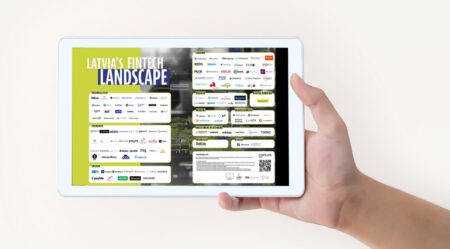
Latvia currently has 126 fintech companies operating domestically, according to the Latvian Fintech Observatory, an online database developed by the Latvian fintech ecosystem created by the Baltic Finance Centre at RTU Riga Business School in collaboration with the Fintech Latvia Association.
Lending and payments are the two biggest fintech verticals, with 28 ventures each. In 2024, lending companies generated EUR 215 million in turnover and paid nearly EUR 33 million in taxes, while payment companies recorded EUR 55.5 million in turnover and contributed approximately EUR 21 million in taxes.
These verticals include some of the country’s biggest and most successful fintech ventures, including DelfinGroup, which offers consumer loans, pawn loans, point-of-sale (POS) loans and the sale of pre-owned goods, and 4finance, which specializes in digital consumer finance. In 2024, DelfinGroup and 4finance reported nearly EUR 51 million and EUR 36 million in turnover, respectively.
In the payment vertical, UK-based Decta and France-based Worldline are the largest players, generating more than EUR 14 million and EUR 13 million in turnover, respectively. Decta provides comprehensive, in-house payment infrastructure solutions, including acquirer and issuer processing, white-label payment gateway and digital banking platform capabilities. Worldline is a payment processing company.
Business technology and cryptocurrency are also prominent, with 25 and 13 companies, respectively. Notable ventures in these categories include Datakom and D8 Corporation in business technology, as well as AltePay and Blockvis in the crypto sector.
Datakom provides a range of IT services to institutions and enterprises, while D8 Corporation helps banks, PSPs, and financial institutions build digital payment infrastructures.
AltePay offers cryptocurrency buying and selling services for cash and provides digital payments consulting. Blockvis leverages blockchain expertise to build high-performing AI agents and prompt-driven solutions.

Latvia is positioning itself as a leading MiCA gateway in the Baltic region. In 2025, two MiCA licenses were issued to BlockBen and Nexdesk.
According to Invest in Latvia, the national investment promotion agency, five MiCA license applications have been submitted, and 12 are currently in pre-licensing. More than 100 international companies are reportedly exploring Latvia as their European Union (EU) base.
Featured image: Edited by Fintech News Baltic, based on image by thanyakij-12 via Freepik