


Lithuanian fintech startups are emerging as prime acquisition targets for major international industry players. According to Deimantė Žemgulytė, a Senior Investment Advisor at Invest Lithuania, this surge in mergers and acquisitions (M&A) activity reflects confidence in Lithuania’s regulatory environment, and an appeal for its expansive talent pool.
In a new blog post published on June 02, Žemgulytė explores the state of fintech in Lithuania, highlighting the series of M&A deals announced over the past couple of months, Ebury’s acquisition of ArcaPay, Checkout.com’s purchase of Blue EMI, and Zilch’s agreement to acquire Fjord Bank as evidence of this trend.
In September 2025, UK-based Ebury completed its acquisition of ArcaPay to establish Ebury Partners Lithuania, expanding the firm’s global services for small and medium-sized enterprises (SMEs), and supporting international growth especially in the Baltics.
Founded in 2011 and headquartered in Vilnius, ArcaPay is a provider of international payment and currency risk management solutions, serving more than 1,000 SMEs clients across the Baltic states.
Ebury, meanwhile, specializes in international payments and foreign exchange (FX) risk management, and strives to become a leading platform for business-to-business (B2B) cross-border trade.
This momentum continued into 2026 with two major transactions in January. Zilch, a consumer payments platform from the UK, signed an agreement to acquire Fjord Bank, a Lithuania-based regulated bank with approximately US$120 million in total assets. The deal provides Zilch with a European banking licence, enabling it to passport its proposition across the bloc with enhanced capital efficiency, whilst broadening its product capabilities.
Zilch also said it will establish Lithuania as its European headquarters as a consequence of the transaction, using Vilnius as its operational and regulatory platform for expansion across Europe.
Launched in 2021, Fjord Bank is a fully regulated challenger bank, focusing on online consumer lending and savings products.
The second transaction involved Checkout.com, a global digital payments provider from the UK as well that announced its acquisition of Blue EMI, a regulated electronic money institution (EMI) in Lithuania. Blue EMI provides payment services and issue euro-backed stablecoins designed for institutional use cases. Its portfolio of products includes open banking services, embedded payment checkout solutions, and card payments to e-commerce businesses and licensed crowdfunding platforms.
Beyond the acquisition, Checkout.com said it will establish a new technology centre in Lithuania, committing to creating high-skilled jobs in one of the EU’s leading fintech hubs. The firm said it the new innovation hub in Vilnius will focus on fostering innovation, cross-border collaboration, and driving local job creation.
Compelling acquisition targets
According to Žemgulytė, these deals have a common thread: the strategic value of Lithuania’s licensing framework. As one of the EU’s largest fintech hubs by license count, hosting 119 licensed EMIs and payment institutions (PI), in addition to 14 entities holding bank or specialized bank licenses, Lithuania offers a unique pool of regulated entities.
This distinction has created a pool of regulated, credible companies with a track record of operating licensed institutions. For international players, acquiring an established Lithuanian firm as such bypasses the costly and uncertain process of applying for new licenses, granting immediate access to functioning compliance teams and a comprehensive knowledge of the regulatory environment.
Beyond licensing, these acquisitions validate the industry’s confidence in Lithuania’s regulatory environment and the Bank of Lithuania’s reputation as a rigorous but accessible supervisor.
It also validates the quality of Lithuania’s human capital, including its compliance professionals, risk managers, operations leads and technology teams that have developed Lithuania over the past decade. Recent research by Invest Lithuania reveals that Lithuania boasts about 78,000 information, communications and technology (ICT) specialists, and 14,000 compliance and risk management specialists.
The surge in M&A activity in Lithuania aligns with the government’s 2023-2028 fintech strategy, which prioritizes qualitative growth, stronger competencies, more sophisticated risk management, and deeper market maturity, over simply granting more licenses.
“Consolidation doesn’t just benefit buyers,” Žemgulytė stressed. “For the companies being acquired, and for their founders, teams and investors, M&A can represent genuine progress. Access to larger capital pools, broader customer and distribution networks, and the operational resources of an international group can enable a Lithuanian company to do far more than it could alone. For local talent, becoming part of a global platform often means expanded opportunity.”
Žemgulytė expects the M&A wave to carry on, driven by positive legislative changes. These include Lithuania’s modernized Law on Joint-Stock Companies, taking effect July 01, 2026, which is designed to make companies more attractive to investors and easier to finance and manage.
The reform introduces redeemable shares, permits companies to provide financial assistance for share acquisitions under safeguards, gives boards or managers greater authority to increase share capital and approve interim dividends when authorized in the articles of association, and relaxes certain shareholder-loan restrictions.
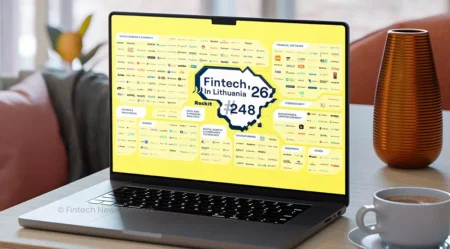
Featured image: Edited by Fintech News Baltic, based on image by inguskruklitis via Magnific