
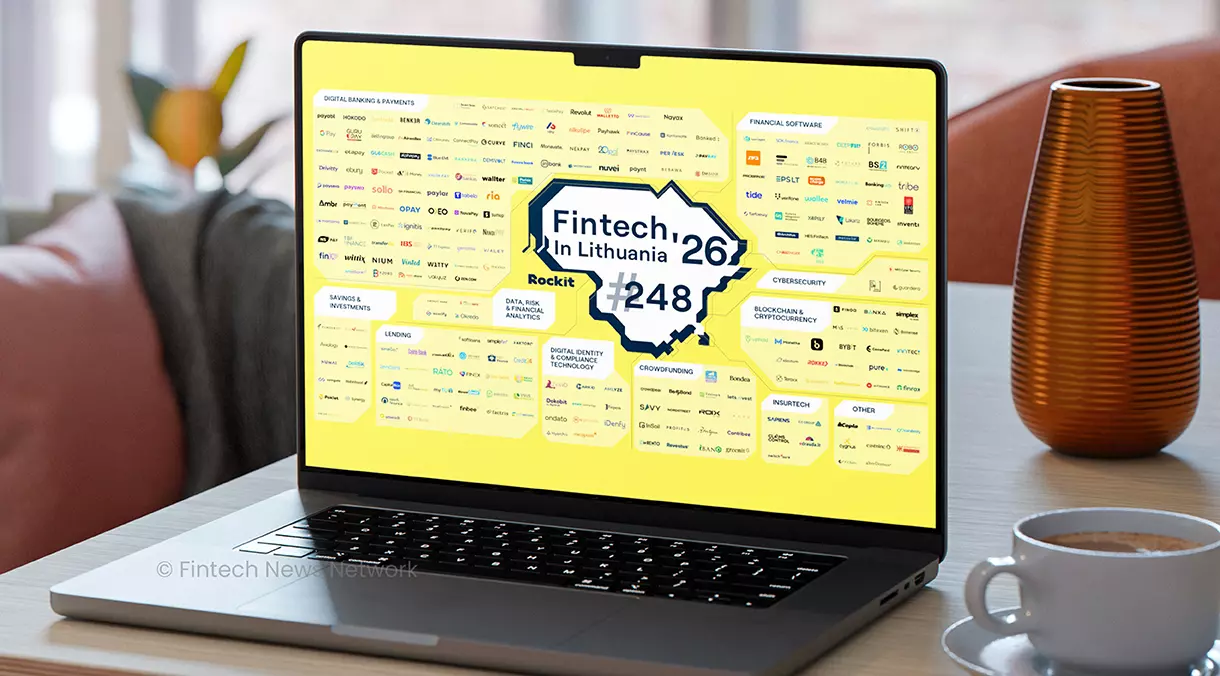
Lithuania’s fintech industry is contracting significantly this year, reaching a five-year low, according to new data released by Rockit, a fintech hub and startup program organizer.
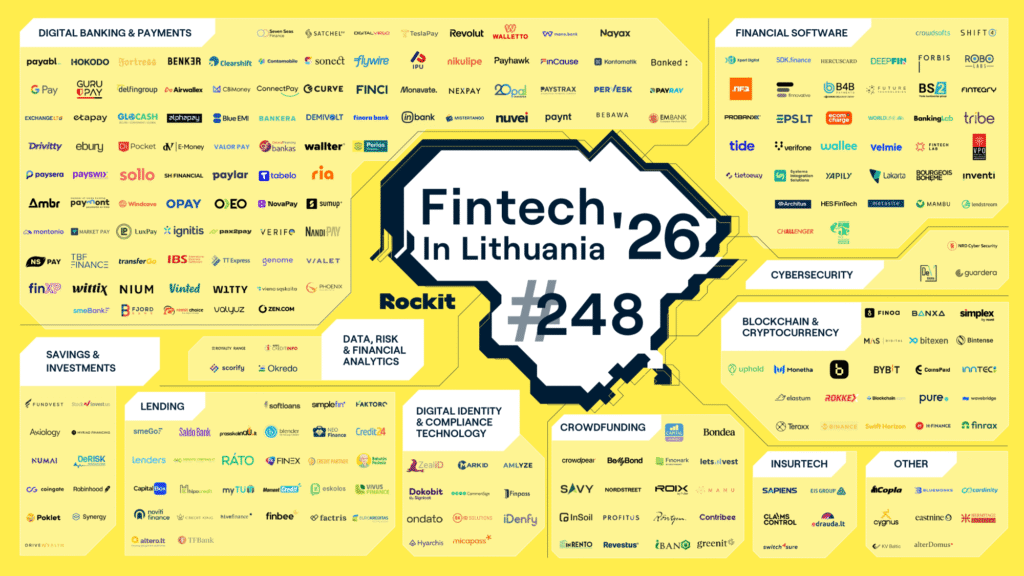
Currently, Lithuania hosts 248 active companies, down 12% from an all-time high of 282 in 2025. This level was last seen in 2021, when there were 230 active firms. It marks the first decline in the sector following a period of sustained momentum.
The blockchain and cryptocurrency category witnessed the biggest year-over-year (YoY) decline. With only 22 active companies this year, the category’s market shared dropped to 9%, down 6 points from 15% in 2025.
This contraction coincides with Lithuanian authorities significantly tightening oversight of the crypto sector as the country implemented the European Union’s Markets in Crypto-Assets (MiCA) framework. Regulators warned that all virtual asset service providers would need full MiCA authorization by the end of 2025 or cease operations in 2026, marking a sharp transition away from Lithuania’s earlier reputation as a relatively easy jurisdiction for crypto registration.
As of May 2026, only six Crypto-Asset Service Provider (CASP) licenses had been granted by the Bank of Lithuania, a far cry from the 324 registered crypto companies in 2024, and the record high of about 850 in late-2022, according to the European Securities and Markets Authority. These licenses were granted to Robinhood, Coingate, Simplex, Myriad Capital, Newrails, and Blue EMI.
Payment and lending grow
Conversely, the payment vertical grew, recording 87 players in 2026 for a 35% share, compared to 30% in 2025. This continued dominance follows the release of Lithuania’s Payments Market Strategy up to 2030, which outlines the central bank’s main priorities for the next four years.
The plan sets out several objectives for the industry, including enhancing the security and resilience of payment systems, increasing accessibility, and driving innovation to reduce dependence on non-European payment cards and mobile wallets.
This growth also coincides with the mainstream adoption of instant payments, facilitated by CENTROlink, a payments infrastructure platform for banks and fintech companies. In 2025, 379.7 million payments were processed in the CENTROlink system, up 28.9% YoY, according to the Bank of Lithuania. Instant payments accounted for 68% of all transactions, up from 60% in 2024 and significantly higher than the broader EU region at about 25%, according to data from the European Central Bank.
Launched in 2015 by the Bank of Lithuaina, CENTROlink lets payment services providers connect directly to European payment systems like SEPA and SEPA Instant, enabling real-time euro payments, payment account verification, and other digital banking services without firms needing a traditional correspondent bank. Built on a centralized “plug-in” model and aimed at fintechs startups and neobanks, the platform has helped Lithuania attract companies like Revolut and become one of Europe’s leading fintech hubs.
Alternative lending also saw growth, prompting a segmentation into two distinct verticals: lending and crowdfunding. Together, these two verticals now count 47 companies, representing a 19% share of the market, up 8 points from 11% 2025.
Similarly, the previously combined category of compliance management and cybersecurity is now split into two separate verticals: digital identity and compliance, and cybersecurity, which count 11 (4%) companies, and 3 companies (1%), respectively, for a combined share of 5% in 2026. This represents a one-point increase from 2025.
These segmentations signal that these verticals are evolving into independent categories, reflecting the industry’s maturation. This suggests increased diversification beyond payments and lending, and towards more complex products across verticals such as financial software, data and analytics, and risk and compliance.
A more mature ecosystem
Rockit’s data from align with trends observed by Invest Lithuania, the country’s investment promotion agency, which found that the Lithuania sector is maturing. While the total number of companies is declining, individual firms are growing in terms of revenue and employment.
Over the past five years, the average company size has grown by a third, while revenue surged nearly fourfold between 2020 and 2024. Meanwhile, the total number of employees in the sector remained unchanged at about 7,800 in both 2024 and 2025.
The industry is also witnessing signs of consolidation, driven largely by established foreign players acquiring smaller Lithuanian firms holding valuable licenses.
In January 2026, Checkout.com, a digital payments provider from the UK, acquired Blue EMI, a licensed CASP which provides payment services and issues euro-backed stablecoins designed for institutional use cases.
That same month, Zilch, a UK-based direct-to-consumer payments network, acquired Fjord Bank, a Lithuania-based bank. The acquisition granted Zilch a European banking license, allowing it to expand its operations across Europe.
Featured image: Edited by Fintech News Baltic, based on image by gongmusiktv via Magnific