


Lithuania’s fintech ecosystem is transitioning into a more mature stage of growth. According to new research by Invest Lithuania, the country’s investment promotion agency, the industry is contracting in overall size, yet the talent base remains stable. Furthermore, consolidation is underway, signaling strong investor confidence. At the same time, increased uptake in digital banking, electronic payments, and crowdfunding platforms shows that the economic significance of fintech in Lithuania continues to expand.
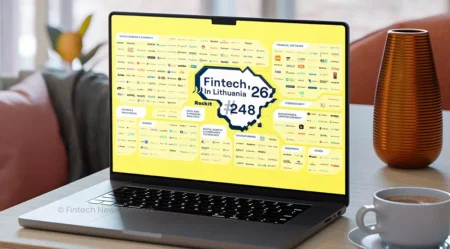
The research, based on desk studies and an online survey of 62 fintech companies operating in Lithuania, reveals that the growth in the number of fintech companies faced its first notable decline. In 2025, 248 fintech companies operated in Lithuania, marking a 12% year-over-year (YoY) decline from 282 in 2024.

Despite this drop, the number of employees in the sector remained unchanged from 2024 at about 7,800.
Over the past five years, fintech companies in Lithuania have sized up by a third on average, reflecting significant traction. This aligns with revenue growth in the sector, which surged nearly fourfold between 2020 and 2024.
Growth expectations remain robust. 65% of the fintech companies polled by Invest Lithuania expect revenue growth of at least 10% in 2026, while 32% anticipate growth of 50% or more. To address this, 77% of the polled companies intend to expand their teams in 2026.

Fintech adoption surges
Growth in fintech activity is being driven by increased adoption of digital financial solutions. According to Greta Ranonytė, Head of Lithuanian Fintech Association, the assets of specialized banks reached EUR 1.7 billion in Q3 2025, up 182% from the end of 2022 and underscoring increased momentum of digital banking.
Specialized banks are a regulated category of banks which can take deposits and provide loans, but which operate under a more limited scope. Key players include Revolut Bank, a leading digital bank serving 70 million personal and 500,000 business customers across over 160 jurisdictions, and SME Bank, a neobank providing day-to-day banking and lending products for businesses.
Digital payments are also increasing. By the end of 2025, the value of payments processed by electronic money (EMI) and payment institutions grew by 60% compared to 2022, reaching EUR 166 billion. This underscores the continued shift towards digital transactions.
Similarly, activity on crowdfunding platforms is rising. By the end of 2025, the amount invested via Lithuanian crowdfunding platforms reached EUR 280 million, growing 74% from 2022.
M&A activity accelerates
This past year has also been marked by a surge in mergers and acquisitions (M&A) activity.
In January 2026, Checkout.com, a digital payments provider from the UK, acquired in January 2026 Blue EMI, a regulated EMI in Lithuania.
Checkout.com is also establishing a new innovation hub in Vilnius to leverage Lithuania’s forward-thinking regulatory landscape, deep pool of fintech talent for technical and compliance roles, and direct access to the SEPA payment system via CENTROlink, the Bank of Lithuania (BoL)’s electronic payment infrastructure.
Blue EMI provides payment services, and issues euro-backed stablecoins designed for institutional use cases. The company specializes in providing open banking services, embedded payment checkout solutions, and card payments to e-commerce businesses and licensed crowdfunding platforms.
That same month, Zilch, a UK-based direct-to-consumer payments network, acquired Fjord Bank, a Lithuania-based bank. The acquisition granted Zilch a European banking license, allowing it to expand its operations across Europe. As part of the deal, Zilch said it will establish its European headquarters in Vilnius, using the city as its operational and regulatory hub.
Earlier, in September 2025, Ebury, another UK company specializing in international payments and foreign exchange (FX) risk management, completed its acquisition of Lithuanian rival ArcaPay. At the time, ArcaPay served over 1,000 small and medium-sized enterprise (SME) clients across the Baltic states. The acquisition gave Ebury an immediate foothold in the region through a strong local sales team and established client portfolio.
Increased M&A activity suggests strong confidence in the long-term potential of the fintech industry in Lithuania and the broader Baltic region. It also shows that Lithuanian fintech companies are becoming increasingly attractive to investors and strategic buyers for their capabilities, efficiency, and scalability.
A prominent fintech hub
Over the past years, Lithuania has become a prominent fintech hub, thanks to its large pool of highly-skilled talent, advanced digital infrastructure, and cross-border connectivities. Supportive government programs have further bolstered this appeal.
The Newcomer Programme, launched in 2016 by BoL, provides a one-stop consultation service for companies seeking financial licenses in Lithuania, ensuring clarity and speed throughout the licensing process.
The Regulatory Sandbox, in operation since 2018, allows firms to test financial innovations in a live environment under the supervision and guidance of BoL, reducing regulatory uncertainty while accelerating market entry.
Finally, CENTROlink offers direct technical access to the Single Euro Payments Area (SEPA) for payment and EMIs licensed in the European Economic Area (EEA). It establishes Lithuania as an attractive destination for fintech companies looking to expand across the EU market, effectively serving as a gateway to Europe.
Further evidence of this appeal, 74% of the fintech companies polled by Invest Lithuania cited access to the EU market as the main advantage of operating in Lithuania, while 60% highlighted the country’s highly skilled talent pool.

Lithuania launched its fintech strategy in 2023, outlining the government’s goals and ambitions for the sector. This strategy aims to increase the sector’s annual turnover growth rate to 30%, and reach a total of 35 million customers by 2028. It also aims to have 70% of fintech companies in the country maintain a workforce of at least 10 full-time employees, and seeks to lure at least eight foreign fintech firms into establishing a presence in Lithuania and committing to creating over 50 jobs within three years of establishment.
Featured image: Edited by Fintech News Baltic, based on image by ijeab via Freepik