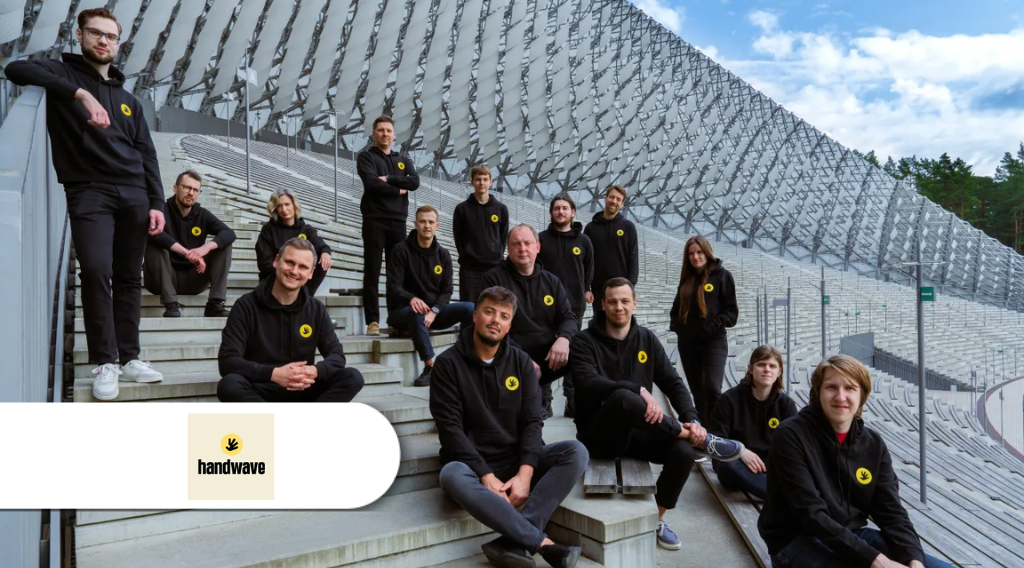



Riga-based biometric technology firm Handwave has secured US$4.2 million in Seed funding to roll out its palm-based identity and payment solution across Europe and the United States. The round was led by regional investor Practica Capital, with participation from FirstPick, Outlast Fund, and Inovo.vc. The funds will support the development of the platform, obtain necessary regulatory certifications, and initiate retail pilot programmes. Founded in 2021, Handwave enables users to pay, verify their age, access loyalty programmes, and check in using only their palm, without the need for cards, mobile phones, apps, or facial recognition technology. The startup’s solution uses proprietary…
Author: Fintechnews Baltic
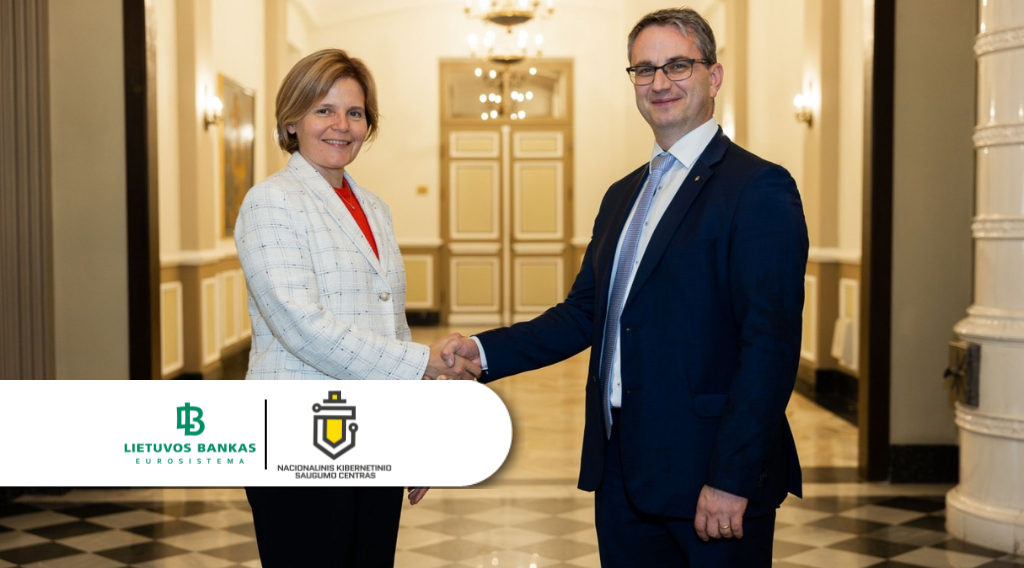
Lietuvos Bankas and the National Cyber Security Centre (NCSC), operating under the Ministry of National Defence, have formalised a new phase of interinstitutional cooperation in the field of cybersecurity. “Cybersecurity is not just about technology, but, above all, about speed and coordinated response. Cooperation with the NCSC will allow us to exchange information more swiftly, respond to threats, and strengthen the resilience of the financial system as a whole,” said Julita Varanauskienė, Deputy Chair of the Board of Lietuvos Bankas. Under the agreement, Lietuvos Bankas will join the National Cyber Incident Management Platform, which is coordinated by the NCSC. The…
Estonian-founded investment platform Lightyear has raised US$23 million in a Series B funding round led by NordicNinja, with participation from Superangel, Specialist VC, Lightspeed, Metaplanet, Skaala, and individual investors including Markus Villig of Bolt and Lars Trunin of Wise. This round brings the company’s total funding to date to US$58 million. Established in 2020 by Martin Sokk and Mihkel Aamer, Lightyear was founded in response to the challenges of investing across Europe. The investment landscape remains fragmented, shaped by differing regulatory regimes, tax systems, currencies, and languages. Recognising the limitations this imposed on retail investors, the founders set out to…
Lithuania has introduced regulatory changes to reduce compliance burdens for low-risk fintech companies while maintaining core anti-money laundering and counter-terrorism financing (AML/CTF) safeguards. The move is part of efforts to reinforce the country’s position as the European Union’s leading fintech hub by number of licensed companies. According to Invest Lithuania, more than 120 licensed fintech firms were operating in the country by the end of 2024, serving over 30 million EU customers. The updated framework adopts a more risk-based approach, allowing financial institutions to assess client risk levels and apply simplified due diligence (SDD) where appropriate, particularly benefiting sectors like…
Tuum, an Estonia-based next generation core banking provider, has announced a partnership with Solidgate, a London-based payment processing and orchestration platform, to support the launch of Solidgate Treasury. The solution enables online businesses to access and manage their funds globally, aiming to remove common obstacles in cross-border payments. Solidgate Treasury is built on a core infrastructure that includes direct access to global payment rails such as SEPA and SWIFT. Tuum’s platform underpins the solution, offering out-of-the-box capabilities that support various payment methods, including global transfers, card payments, and integrations with service providers in the fintech ecosystem. “We are excited to…
The Bank of Lithuania (Lietuvos bankas) has issued a strong call for virtual currency exchange operators and depository virtual currency wallet operators who do not intend to apply for a crypto-asset service provider license to begin the process of winding down their operations immediately, ahead of the 31 December 2025 transitional deadline under the EU’s Markets in Crypto-Assets Regulation (MiCA). In newly issued guidance, Lietuvos bankas advises all operators listed with the State Enterprise Centre of Registers, and not planning to continue operations under Regulation (EU) No 2023/1114, to take urgent action to protect investors, uphold market transparency, and ensure…
The European Central Bank (ECB) has released its third progress report on the preparation phase of a digital euro, which began on 1 November 2023. This phase is focused on laying the groundwork for a potential digital euro issuance. Since the second progress report, the ECB has made further progress on the draft rulebook for the digital euro scheme. The rulebook is intended to standardise digital euro payments across the euro area and provide a modern and user-centred experience. Input from the Rulebook Development Group, which includes representatives from the European retail payments market, has contributed to improvements in the…
Axiology, a fintech company based in Lithuania, has received authorisation under the European Union’s DLT Pilot Regime to operate a trading and settlement system using distributed ledger technology (DLT). The authorisation, granted by the Bank of Lithuania in coordination with the European Central Bank (ECB) and the European Securities and Markets Authority (ESMA), makes Axiology the second entity in the EU to receive this approval and the first in Northern and Eastern Europe. The license includes a financial brokerage firm authorisation and permission to operate a DLT-based trading and settlement system (DLT TSS). This allows Axiology to manage a digital…
Estonia-based fintech company Wallester has appointed Indrek Tibar as its new Head of Anti Money Laundering (AML), effective July 2025. Tibar brings more than 20 years of experience in financial crime prevention and AML leadership across both public institutions and the private sector. As the company continues its growth, it is placing increased emphasis on compliance and risk management. Tibar’s arrival follows other recent senior appointments, including Rein Ojavere as Head of Risk and Aivar Paul as Chief AML Officer. Both have held key roles in Estonia’s financial sector and government agencies. Tibar’s background includes extensive experience in both law…
The Lithuanian Parliament (Seimas) has approved a package of legislative amendments initiated by the Ministry of Economy and Innovation (EIMIN), establishing the “Investment Highway” – one of the most investor-friendly frameworks in the region. Starting immediately, an investment calculator is publicly available on the ministry’s website, where incoming investments to Lithuania are registered. We have set an ambitious goal: to attract €10 billion in investments by 2030, thereby ensuring economic growth and further contributing to defense funding. We want Lithuania to become an even more advanced country, where major investment projects can be launched within a few months and completed…
Robinhood has established its first European hub in Lithuania. The company obtained both a Category A financial brokerage license and a crypto asset services provider license, from the Bank of Lithuania. Robinhood was founded in 2013 and is headquartered in the United States and publicly traded on Nasdaq. The company operates a trading platform that offers stocks, options, ETFs, and cryptocurrency trading. Serving over 25 million customers worldwide, Robinhood has expanded its services beyond traditional brokerage to include cash management, retirement accounts, and crypto wallet services across multiple markets. In Europe, Robinhood has launched a dedicated cryptocurrency trading platform through…
Tuum, an Estonia-based next-generation core banking platform, has entered into a strategic partnership with maib, Moldova’s largest bank, to support its entry into the Romanian market. The partnership will see Tuum provide the core banking infrastructure for maib’s new digital banking initiative in Romania, which will operate as a retail-focused, asset-light entity. Following an extensive evaluation of core banking providers, maib selected Tuum for its modular design, modern system architecture, and its flexible deployment options. Tuum’s ability to offer agnostic deployment, including in-country hosting where required, was noted as a key factor in ensuring compliance with European data residency requirements…
Artificial intelligence (AI) is a rapidly advancing industry in the Baltic states of Estonia, Latvia, and Lithuania, with a growing number of companies now focused on building AI-native products, rather than simply enhancing existing offerings with AI, according to a new report by Riga-based management consultancy Venture Faculty, in collaboration with Dealroom. The report, released in June, explores the growth of the AI sector in the Baltic region, offering a comprehensive mapping and analysis of AI-powered companies based in the Baltic states. It notes that the Baltics is now home to 184 AI companies, with the majority of them (52.7%)…
Paynt, a Lithuania-based payment technology company, has announced the acquisition of Canadian firm E-xact Transactions, marking a significant step in its strategic expansion across North America. Paynt currently operates across the European Economic Area and the United Kingdom, with regional offices in the UK, Ireland, the Baltic States and the US. The acquisition of E-xact, which processes more than CAD 3.5 billion annually across over 50 million transactions, will establish a new operational base in Vancouver, Canada. To support this expansion, Paynt has appointed payments industry veteran JohnPaul Golino to its board of directors. Golino will oversee the integration of…
Latvia is steadily becoming an attractive hub for cryptocurrency and blockchain firms, fueled by increasing interest from international firms pursuing Markets in Crypto-Assets (MiCA) licenses. This development comes as the Baltic country is aggressively building itself as a welcoming and innovative European center for crypto and blockchain companies through favorable regulation, tax incentives, and government support. According to the Ministry of Economics, several globally recognized crypto-asset service providers are currently considering Latvia for operating licenses. While no specific names have been shared, these newcomers would join Latvia’s ~20 cryptocurrency and blockchain startups, according to data from Venture Faculty. Key players…
myTU, a a Lithuania-based digital bank, has introduced support for Apple Pay, providing a more secure and private way to make payments without handing over a physical card, touching payment terminals, or using cash. The update comes after the earlier rollout of Google Pay and forms part of a broader update to the myTU app, which now includes instant card issuance, token management, and improved support for digital wallets. With Apple Pay integration, customers can make contactless payments by holding their iPhone or Apple Watch near a payment terminal. Each transaction is authenticated using Face ID, Touch ID, or a…
Axiology, a Lithuania-based company developing distributed ledger technology (DLT) infrastructure for regulated tokenised securities under the EU DLT Pilot Regime, was named both the regional Baltic Class Winner and the Overall Winner of the Mastercard Lighthouse FINITIV Programme, Spring 2025. The announcement was made during the programme’s Startup Showcase and Grand Finale, held at the Latitude59 conference in Tallinn, Estonia. The selection committee recognised Axiology as the Overall Winner “due to their innovative idea and partnership readiness that they demonstrated towards all programme partners. Their solution is aiming to revolutionise the market, which made them stand out in the eyes…
As digital commerce continues to evolve, more businesses in Lithuania are exploring new ways to improve the efficiency and security of their payment processes. One area gaining traction is Open Banking — a framework that enables direct payments between banks, reducing the reliance on traditional card networks and helping companies optimise operations. Responding to this shift, Noda, a global Open Banking platform, is introducing a dedicated offer for Lithuanian businesses in partnership with Startup Lithuania. The initiative is aimed at startups and small businesses looking to explore alternative payment methods and reduce operational costs. Addressing Payment Challenges Through Open Banking…
Revolut has launched mortgage refinancing services in Lithuania, marking the company’s first step into the home loan market. The service is integrated into the Revolut app and allows customers to manage the refinancing process digitally. Users will receive personalised, pre-approved offers within minutes. Revolut covers the cost of property valuation and notary services, and local mortgage managers are available for support. After refinancing, customers can manage their mortgage through the app. Revolut does not charge administrative fees for this service. The launch coincides with regulatory changes in Lithuania aimed at simplifying mortgage refinancing. Joe Heneghan, Partner and Chief Executive Officer…
Tuum, a next-generation core banking platform based in Estonia, has been selected by Bondora, a European consumer finance provider, to support its plans to become a fully licensed digital bank and to modernise its lending operations across several EU markets. The partnership will see Tuum provide its cloud-native core banking system to support both Bondora’s planned greenfield digital banking initiative and the migration of its existing consumer credit operations. This will bring both areas of the business onto a single modular platform. With more than 16 years in the market, Bondora is a digitally focused fintech company operating in five…