
Estonia is leading a pioneering effort to train students to use artificial intelligence (AI), with approximately half of the country’s 20,000 upper secondary students now using a new educational platform developed in partnership with OpenAI, Kristina Kallas, Estonia’s Education and Research Minister, told Politico in an interview in May 2026. The remainder of the students are expected to join this summer, with vocational schools set to follow suit in the next academic year.
Estonia established a partnership with OpenAI in February 2025 to bring ChatGPT to schools nationwide. It grants all students and teachers in the secondary school system with access to ChatGPT Edu, a customized version of the app built for education systems, and API services.
Beyond access, the collaboration also includes technical support and knowledge-sharing for dedicated use cases such as custom GPTs designed to streamline administrative tasks for teachers and support students to build their creativity and critical thinking skills. Possible use cases include feedback assistance, student support, study assistance, and lesson planning.
Estonia’s AI Leap initiative
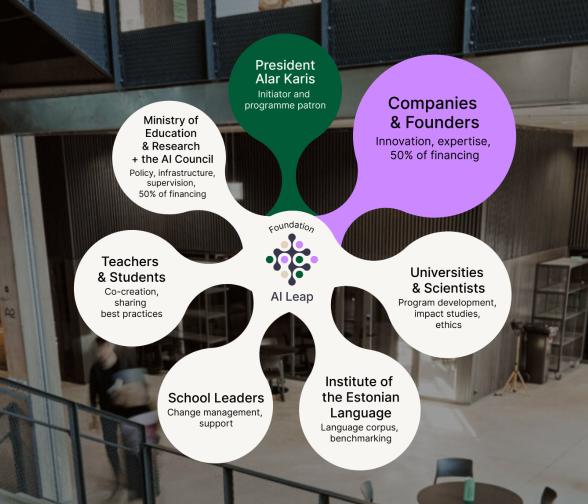
The push is part of the AI Leap initiative, a public-private sector collaboration launched in 2025 by the President of Estonia. Designed to help schools adapt to the age of AI, the program provides free AI tools and a framework for their use in learning.
The program has three main focus areas. For teachers, it provides nationwide trainings and school-based learning communities to share best practices, subject-specific teaching materials and tips, and change management in collaboration with the Ministry of Education and Research, school leaders, and teacher associations.
For students, the program collaborates with youth organizations such as the School Student Councils’ Union, JA Estonia, and the Estonian Debating Society, to explore AI tool use cases through hackathons, co-creation sprints, debate tournaments, and creative workshops. Interactive AI literacy workshops are also being tested and scaled across the country.
Finally, the AI Leap will focus on creating and continuously developing special learning apps for Estonian students, providing access to the paid version of ChatGPT or Google Gemini for all high school teachers, and offering AI literacy trainings.
Estonia finances 50% of the AI Leap program, while the private sector contributes the remaining 50%. Throughout the program, Estonia will monitor the impact of AI Leap on students through educational psychologists and researchers from the University of Tartu, while the Institute of the Estonian Language will assess compliance with local language and cultural standards.
Europe’s cautious approach
Estonia’s stance on AI differs sharply from the approach taken elsewhere in Europe where AI adoption is viewed with caution.
Across the continent, regulators have voiced concerns about misinformation, digital manipulation, online harms, and the need for critical thinking skills. AI literacy is increasingly perceived as a priority to be integrated alongside media literacy and digital resilience.
Furthermore, the focus has been on curbing excessive screen time among minors, with several nations moving toward restrictive legislation.
In January 2026, France lawmakers passed a bill that would ban social media use by children under 15, and forbid mobile phones in high schools. Authorities want the measures to be enforced from the start of the 2026 school year for new social media accounts.
Similarly, Norway will present a bill in parliament by the end of 2026 to ban children from using social media until they turn 16, making technology companies responsible for the task of age verification, the minority Labour government said on April 24, 2026.
Poland, Slovenia, and Austria are also preparing similar legislation.
At the European Union (EU) level, the Parliament agreed in November on a resolution, calling for a digital age limit of 16 as the default threshold under which access to online social media platforms should not be allowed without parental or guardian consent. The same age limit should apply to video-sharing platforms and “AI companions that pose risks to minors”. It further called for a harmonized European digital age limit of 13, under which no minor may access social media platforms.
Building relationships with governments
OpenAI’s deal with Estonia is part of the firm’s push to promote the use of AI in schools. In January 2026, OpenAI launched Education for Countries, an initiative designed to help governments and universities integrate AI into national education systems and provide AI tools, teacher training, certifications, and research. Programs are customized to local languages, curricula, and workforce goals.
Besides Estonia, the first cohort part of the Education for Countries initiative includes Greece, Jordan, Kazakhstan, Slovakia, and the United Arab Emirates (UAE). Most recently, Singapore joined the program to explore a variety of AI tools for use cases such as interactive mother tongue language learning. Educators in Singapore are also receiving support through the OpenAI Academy and Codex for Teachers hackathons.
OpenAI’s Education for Countries initiative is part of the broader OpenAI for Countries strategy. Launched in May 2025, this strategy focuses on boosting AI adoption by providing customized ChatGPT apps, help built in-country data center capacities, and deploy national startup funds. This infrastructure collaborations are coordinated with the US government.
In exchange for these resources, partner countries are required to invest in the Stargate Project. Announced in January 2025 by US President Trump alongside partners Oracle and SoftBank, the Stargate Project intends to invest US$500 billion over four years to build AI infrastructure in the US. The project is currently underway with the first supercomputing campus in Abilene, Texas, and more sites to come.
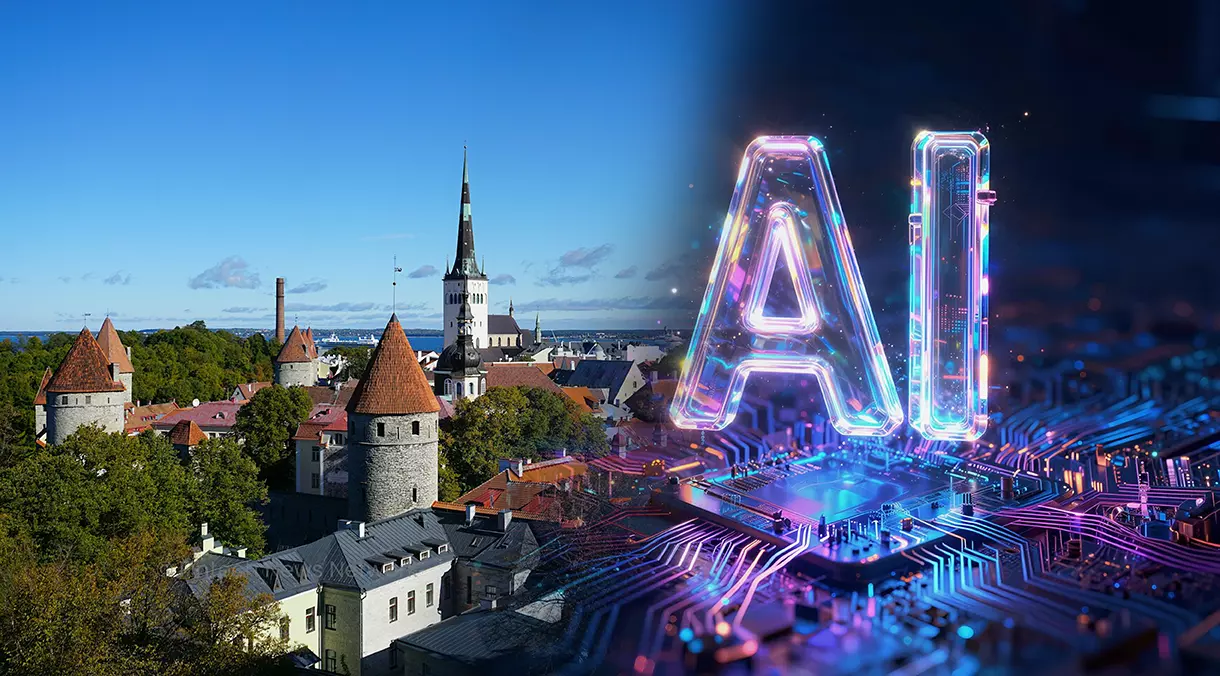
Featured image: Edited by Fintech News Baltic, based on images by gertrudl via Unsplash, and utaem2022 via Magnific